Semantic Engineering for Enterprise AI in Snowflake
Autonomously engineer, govern, and evolve enterprise semantic models across schemas, domains, and environments.
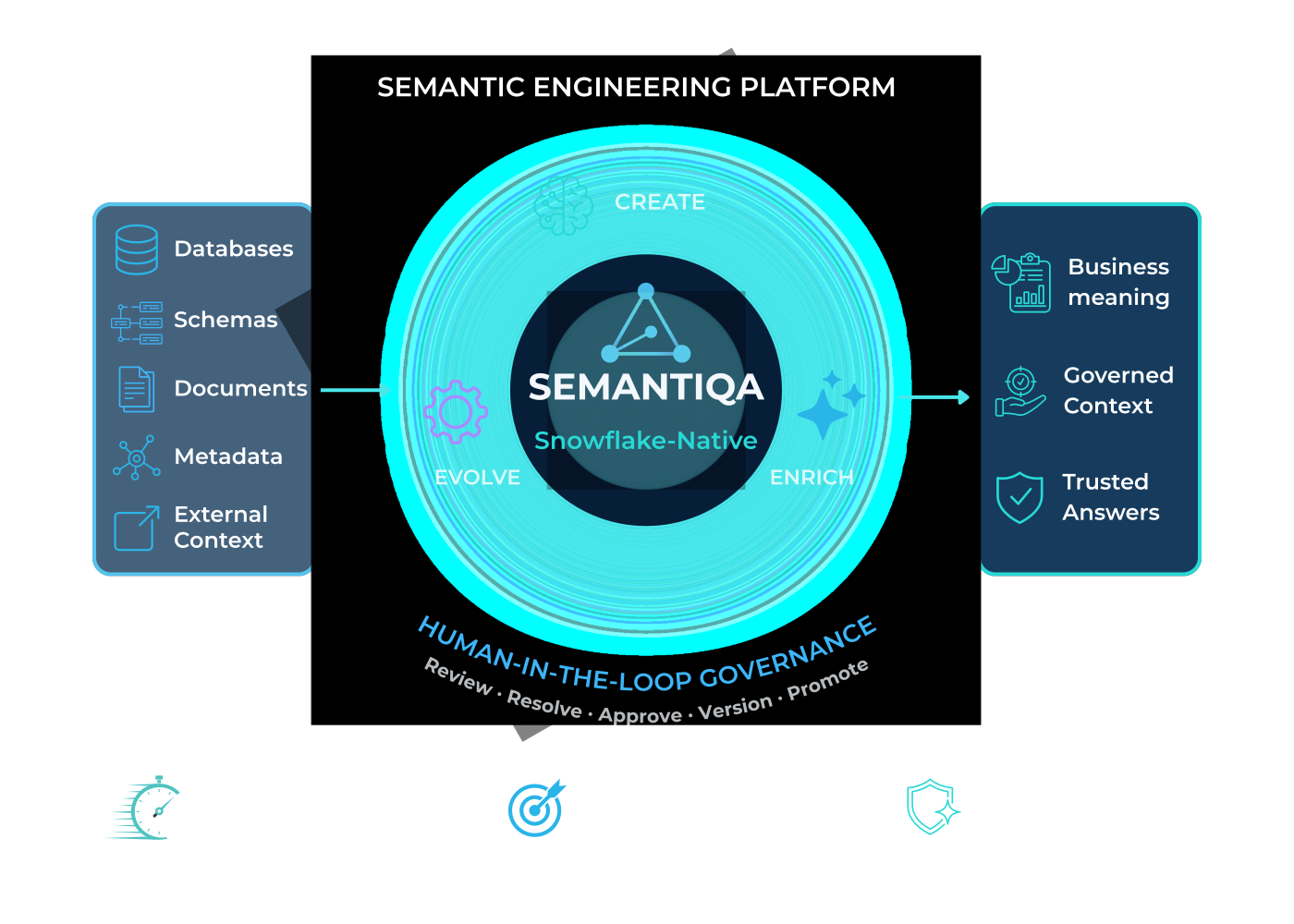
Connect Business Meaning Across Domains
Semantiqa connects metadata, relationships, and query history across schemas and business domains into one governed semantic model.
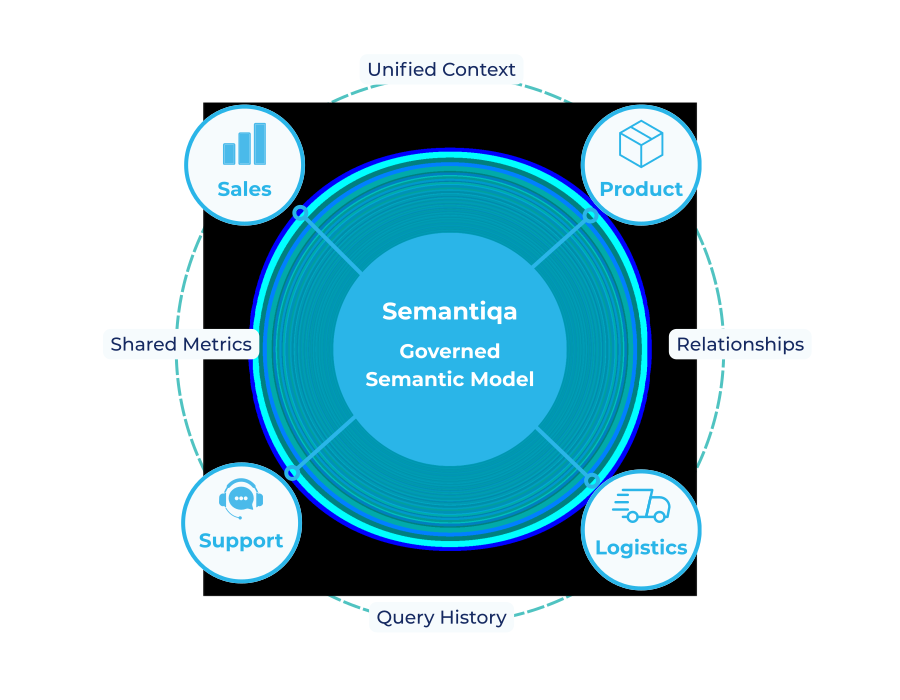
Create at Machine Scale. Govern with Business Judgment.
Discover & Create
Autonomously discover business structure and create the semantic model across selected Snowflake data.
Enrich
Add enterprise knowledge and business context to strengthen the semantic model.
Review & Resolve
Put human judgment in control when definitions or business meaning conflict.
Publish
Publish only the approved semantic state while preserving changes as controlled versions.
Semantic Engineering
Inside Snowflake
Semantiqa runs as a Snowflake Native App — keeping semantic engineering inside your Snowflake environment.
Zero Data Egress
Data stays inside Snowflake.
Native Execution
Semantic processing runs inside Snowflake.
Snowflake Governance Alignment
Works with RBAC, RLS, masking, and permissions.
Native Semantic Assets
Creates reusable Snowflake Semantic Views.
Six Coordinated Layers. One Governed Semantic System.
Semantiqa autonomously creates and coordinates six layers of semantic intelligence across schemas and domains — ready for enterprise analytics and AI.
The Governed Enterprise
Semantic Model
The Semantiqa Registry is the single governed model your enterprise maintains as the trusted definition of business meaning — versioned, approved, and ready to use.
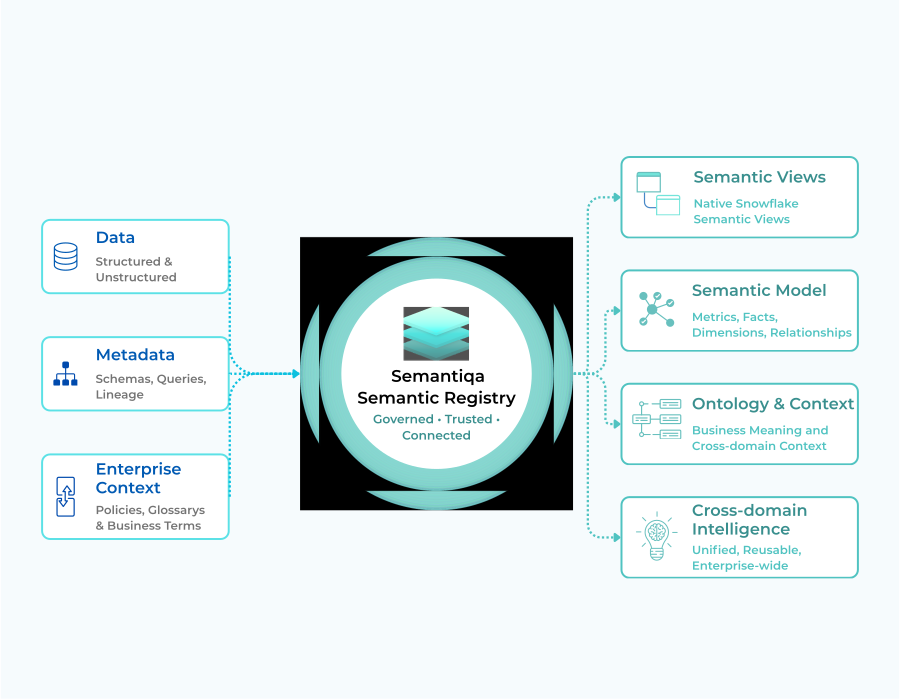
From Semantic Creation to Enterprise SemanticOps
Semantiqa manages the complete semantic lifecycle — from autonomous discovery and creation to governed production operation.
One Governed Semantic Foundation. Across Enterprise AI.
Semantic intelligence engineered and governed by Semantiqa can be reused across multiple AI, analytics, and application experiences rather than recreated for each one.
Semantiqa Chat
Governed natural-language analytics with SQL, lineage, and supporting data.
Self-Service Analytics
Persistent semantic context across interactive dashboards and follow-up analysis.
Governed Semantic Foundation
Snowflake AI Experiences
Native Semantic Views created by Semantiqa remain available to Snowflake AI experiences.
MCP-Connected Agents
External agents can request governed semantic context through Semantiqa's MCP interface.
APIs & Applications
Semantic intelligence can be exposed to applications and workflows programmatically where supported.
Build, Validate, and Publish Snowflake Semantic Models.
Semantiqa helps teams create, manage, validate, and publish governed semantic models for Snowflake. It connects business metrics, source metadata, governance terms, and AI-powered analytics in one reusable semantic registry.
| Snowflake Semantic Model YAML | Upload Snowflake Semantic Model YAML files and preview changes before applying them to your registry. |
| Metadata Refresh and Schema Drift | Refresh registry metadata from Snowflake to detect schema changes and update semantic definitions safely. |
| Governance Metadata Enrichment | Connect external governance and glossary metadata to enrich your semantic registry with ownership and classifications. |
| Conflict Review | Resolve semantic model conflicts when incoming metadata cannot be merged automatically. |
| Validation and Publishing | Validate semantic views before publishing them for chat, dashboards, and analytics workflows. |
| Access Control | Control access with application roles, registry permissions, and Snowflake object privileges. |
| SemanticOps Promotion | Version, publish, and promote governed semantic definitions across development, test, and production environments. |
Semantiqa Competitive Landscape
Capability comparison across installation time, architecture, cross-domain modeling, and governance.
| Capability | Semantiqa | Manual / Custom Semantic Modeling | External Semantic Platforms | Text-to-SQL Tools | AI Agent / Copilot Tools |
|---|---|---|---|---|---|
| App Installation Time | ✓ 15–20 Minutes | Days to Weeks | Weeks to Months | Hours to Days | Varies |
| Semantic Intelligence in ONE DAY | ✓ Core Semantiqa promise | Project dependent | Project dependent | Not comparable | Not comparable |
| Cross-Domain Semantic Model | ✓ Across schemas, databases & domains | Possible, but manually engineered | Varies by implementation | Depends on supplied semantic context | Depends on supplied semantic context |
| Zero Data Egress | ✓ Data stays in Snowflake | Depends on implementation | ✗ Often requires data movement | Depends on architecture | Depends on architecture |
| Native Snowflake Semantic Views | ✓ Generated and reusable | Can be manually created | Varies | Consumes existing semantic assets | Consumes existing semantic assets |
| Human-in-the-Loop Governance | ✓ Review, enrich, resolve & approve | Process dependent | Varies | Limited / outside core function | Limited / outside core function |
| DEV → TEST → PROD Promotion | ✓ Governed promotion without rebuilding | Custom deployment process | Varies | Usually outside core function | Usually outside core function |
| Snowflake Governance Alignment | ✓ RBAC / RLS / masking | Depends on implementation | Depends on architecture | Depends on implementation | Depends on implementation |
Questions We Always Get Asked
Semantiqa coordinates six complementary layers:
- Native Semantic Views are Snowflake-native semantic assets representing governed dimensions, facts, metrics, and relationships.
- Semantic Model covers facts, dimensions, metrics, joins, relationships, synonyms, definitions, and business logic.
- Ontology & Context organizes business concepts and relationships and connects meaning across domains.
- Enrichment Layer adds enterprise knowledge from metadata, query history, documents, business glossaries, policies, and governance platforms.
- Agentic Layer makes governed semantic intelligence available to AI applications, Snowflake experiences, and MCP-connected agents.
- Intent Layer interprets each request and determines which governed semantic context is relevant.
These six layers are created and coordinated together as one semantic system, not a rigid sequential stack.
Your Semantic Model
Live.